Showing posts with label slice-of-life. Show all posts

Monday, November 14, 2011

“Otaku Inside Me” – Genshiken (manga) – 9/10 Pumpkin Pies


All men dream, but not equally. Those who dream by night in the dusty recesses of their minds, wake in the day to find that it was vanity: but the dreamers of the day are dangerous men, for they may act on their dreams with open eyes, to make them possible. ~T. E. Lawrence

Mangaka: Kio Shimoku

Genre: Comedy/Romance/Parody/Slice-of-Life

Review Status:
Complete (9 Volumes/9 Volumes)

Licensed: Yes, this manga is licensed in the US

Art: It looks quite nice and professional. The characters are easily recognizable, they look good, the panels are clean and easy to follow… no complaints from this quarter!

Summary: It's the spring of freshman year, and Kanji Sasahara is in a quandary. Should he fulfill his long-cherished dream of joining an otaku club? Saki Kasukabe also faces a dilemma. Can she ever turn her boyfriend, anime fanboy Kousaka, into a normal guy? Kanji triumphs where Saki fails, when both Kanji and Kousaka sign up for Genshiken: The Society for the Study of Modern Visual Culture.

Undeterred, Saki chases Kousaka through the various activities of the club, from costume-playing and comic conventions to video gaming and collecting anime figures--learning more than she ever wanted to about the humorous world of the Japanese fan . . . (Del Rey)

Review: Genshiken is a manga that both makes fun of otaku culture, at the same time it celebrates it. It’s as far from Lucky Star as you can get in tone and approach to it all, which will be great for some and not for others. The way it’s done enriches and deepens the story without making it cheesy or melodramatic- something that’s hard to do.

On the surface, this is about a bunch of guys that love anything ecchi and perverted, raiding the local comicfests for stuff that they can whack off to, while anime and manga references happen a few times a chapter (some I can pick up on, others are a little more obscure). What kept me reading was that as it went on, it got deeper, more complicated, and wonderfully realistic. A girlfriend joins to keep an eye on her brother, and the quirks and frustrations in her relationship with her boyfriend become great fodder for jokes and a great story that fits in with the rest of the club’s. More girls join, with diverse interests, from the cosplay fantatic, to the manga club reject, to the girl who’s just there to see if she can win the boyfriend.

This creates interesting dynamics in the club and between individual members. Relationships develop naturally, involving unrequited love and stubborn confessors. They find ways to work with each other to get projects and events done- something that requires work on their ends and sometimes isn’t the best. While they grow into working with each other, they also grow up. Members move on, get jobs, and disappear from the manga except for occasional mentions while others take their place. Each new ‘generation’ of Genshiken members brings something to the table, and the evolution from porn club to doujin-making club to cosplay club is both interesting and doesn’t seem forced. The club was a mishmash of things otaku to begin with, and so each evolution brings a new side of it to light.

The otaku side is never forgotten. There are comic-fests, the issues behind publishing a doujin, what it takes to cosplay… It’s hard to think of something that isn’t touched on. Something that was nice to see what how Americans were brought into the culture- Alice, a friend of one of the members from the States, is as much otaku as the rest of them, and is endearing and hilarious. Because of her interest, the issues of coming over and being an otaku are touched on. If that doesn’t say something about how many things are mentioned, then I don’t know what does.

Overall, this was a great slice-of-life that touched my otaku funny bone.

Recommended
: 18+. This deals a lot with the sexual side of okatudom, with sexual doujins pretty much all the guys buy, along with porn games, hentai, and one guy is discovered to have a collection of real-life porn. The girls also get in on the action with yaoi titles for themselves, and one of them makes a yaoi doujin based off of two members of Genshiken. None of this is ever shown on the page- or in the extremely rare times it is, it is heavily censored so you can’t tell what’s in the picture. Sex is mentioned often, never graphically, but there are discussions of how many times, whether someone’s done it, and whether there is role playing. There is nudity when the girls go to the hot springs. They are clearly naked, but the page is so censored it’s Barbie-doll nudity, and non-sexual except for a joke made to get laughs.

There is very little language, perhaps two or three mentions of the d-word. There are a two or so instances of comedic violence.

Other titles you might enjoy:

Genshiken 2 (manga)
Genshiken (anime)
Lucky Star (anime or manga)
Welcome to the NHK (anime or manga)
Otaku no Video (anime)
Bakuman (anime or manga)
Kuragehime (anime or manga)

Saturday, October 29, 2011

“A Time Of Healing” – Haibane Renmei (anime) – 10/10 Black Cats


There came a time when the risk to remain tight in the bud was more painful than the risk it took to blossom. ~Anaïs Nin

Genre: Slice-of-Life/Fantasy/Spiritual/Drama

Review Status: Complete (12 Episodes/12 Episodes)

Licensed: Yes, this anime is licensed in the US. However, it is out of print.

Art/Animation: The art is absolutely lovely, with backgrounds that seem to be watercolor, with vibrant colors and easily recognizable characters. The animation is also very good- it can easily stand up to the shows made today in many ways.

Dub Vs. Sub: While overall I prefer the dub because I feel that Rakka’s voice it too high-pitched and breathy in the dub, the dub is very good overall.

Summary: In a long-forgotten walled town, humans coexist with the Haibane, angelic-like beings of unknown origin. Rakka becomes the newest Haibane, after she awakens from a strange dream and finds herself hatching from a massive cocoon. With no memories of her previous life, Rakka struggles to adjust to her new surroundings, however burning questions remain in the back of her mind. What is Haibane and what is their purpose? What lies beyond the huge, forbidden town walls? Thus, Rakka begins her wistful journey of self-discovery and wonderment. (back of dvd cover of 1st volume)

Review:
Haibane is a stand-out series in every way. This takes an imaginary town and fills it with enough wonders and mystery to have spawned a thousand different theories on what the place is and what is happening both inside and outside the walls.

This starts out as a show that is about Rakka learning about the ways of the Haibane. She is introduced into the strange rituals that mark their lives, and how they interact and live with the humans in town. As she lives each day Rakka grows closer to the rest of the Haibane, each making their way into her heart. However, an event that emotionally destroys Rakka brings to light the purpose of this place and the reason the Haibane are there.

It’s clear that wherever this place is, it’s someplace that certain people go to where they die- those that are born as Haibane, that is, while humans provide them with friendship and things the Haibane need to survive. Those born as Haibane have something to atone for or overcome from their other life, and by being born here and living their lives, they have a chance to overcome it… or be drowned in their emotions and past.

Rakka’s emotional distress links to her cocoon dream, and both she and a friend are brought to the brink of destruction in turn. There are dark themes and things that run through both stories, and Rakka must find a way to bring herself out of darkness- and then save her friend.

Overall, this was a beautiful story of friendship and overcoming grief, with many themes that flow through it.

Recommended: 10+. There is no language, no nudity, and no violence, but a type of self-mutilation does occur, and it’s clear that at least one Haibane committed suicide. When Rakka’s wings sprout, blood does spurt, but it’s not a lot and the growth isn’t graphic.

Other titles you might enjoy:
Kino’s Journey (anime)
NieA Under Seven (anime)
Colorful (anime – movie, not the terrible series)
Yokohama Kaidashi Kikou (manga)
Angel’s Egg (anime)
Mushishi (anime and manga)

Friday, October 28, 2011

“The Trials of Love” – The Color of Earth/Water/Heaven (manhwa) – 9/10 Black Cats


Do not regret growing older. It is a privilege denied to many. ~Author Unknown

Mangaka: Dong Hwa Kim

Genre: Slice-of-Life/Drama/Romance/Historical

Review Status
: Complete (3 Volumes/3 Volumes)

Licensed: Yes, this manga is licensed in the US

Art: The art might not be considered ‘pretty’- it’s really very plain, but it makes wonderful use of space in emphasizing things and making the story more expressive. Some of the panels are starkly beautiful. This uses a policy of ‘show, not tell’ to tell the story, and creates some of the most amazing scenes that convey a thousand things with a simple motion or expression. There is discretion and visual metaphor used when depicting openly sexual scenes. Whatever else it’s failings, the sheer skill it takes to do that is astounding and more than makes up for it.

Summary
: The Color of Earth tells of the daily lives and about the world of two generations of Korean women. Sometime in the past, in a quiet rural village of Namwon, Ehwa lives with her mother, a widowed tavern keeper. They are best friends and tell each other many secrets. As each spring passes she learns about her changing body and begins to learn about life. As Ehwa grows, her mother, left alone at young age, rediscovers love. As Ehwa grows, she also discovers love and must face a trial in order to be with him.

Review: “The Color of…” is a unique manga in a thousand ways. It is the only manga I have ever seen to deal with love and sex, and do it in a way that is both mature and sensitive. Using lyrical language that is full of similar and metaphor, each book tackles the different stages of growing up and maturing in a rural village in the late 19th Century/early 20th Century, and what it means to find love.

Each book separates Ehwa’s growth and maturation into sections, not defined by age so much as what happens at those ages. “The Color of Earth” begins with Ehwa discovering the differences between men and women, innocence leading to more than one misunderstanding (thinking that she’s deformed), and the men that frequent her mother’s inn casting her into confusion about the propriety between men and women. And as she discovers her first love, so her mother rediscovers love. This has a few rough edges concerning the story, but is fairly funny. The discussions she and her mother have are honest, and her mother introduces her to the simile and metaphor she herself uses to often speak of love (and other things, when Ehwa isn’t around). Ehwa discovers that there are some she cannot and should not love for various reasons, and learns of heatbreak.

The second book flows far better. Conversations flows far more smoothly, with much joking and teasing, which makes this a delight to read. It also becomes more in-depth when it comes to the body and sex. There’s a marked difference between the Ehwa of a few years ago, who crushed on the boys in her village, and the one who now longs for a man who will truly love her- she doesn’t waste her thoughts on guys who are only looking for a quick lay or are only messing around. This leads to a fateful meeting with a man that is serious about her- and in turn must leave her.

The third book is about Ehwa having discovered love, but dealing with the wait and heartbreak that comes with needing to wait for someone to return from a long journey. Because this takes place in an old time period, the wait seems long and is fraught with waiting and thoughts on what's happening. There is a change in Ehwa and her mother's relationship as she's is nearly a grown woman and her mother is aging. Ehwa does finally marry, and her mother's observations on watching her daughter leave hit home- beautiful thoughts that capture the essence of the loss of someone so dear. All the things that happened in the former books come together in a way that is just like real life- the culmination of experience and learning. And it's done in a way that is satisfying and beautiful.

Overall, even with a little bit of a rough start, this is a fantastic manhwa that tells a beautiful story.

Recommended: 18+. This is a story that deals with sex and sexuality- while the only genitalia overtly shown are those of young boys (briefly) and breasts on occasion, but there are suggestive gestures, blantantly sexual themes, and sex is shown (though it isn’t obscene in the context of the story. It actually comes across as something special and loving).

Other titles you might enjoy:
Usagi Drop
Solanin

Tuesday, October 11, 2011

“The Place I Belong” – Whisper of the Heart (anime) – 10/10 Black Cats


We grow neither better nor worse as we get old, but more like ourselves ~May Lamberton Becker quotes

Genre: Slice-of-Life/Romance

Review Status: Complete (1 Movie/1 Movie)

Licensed: Yes, this anime is licensed in the US.

Art/Animation: Lovely. The animation is very smooth, background characters and objects move, and while the art is the typical Ghibli style, it remains as lovely and bright as anything.

Dub Vs. Sub: Both the dub and the sub are fantastic! You can’t go wrong with either.

Summary: During summer vacation, a schoolgirl named Shizuku, who longs to discover her true talents, observes and ordinary-looking cat riding by himself on the train. Intrigued, she decides to follow him. This cance encounter leads her to the mysterious Seiji, a boy who is determined to follow his dreams, and The Baron, a magical cat figurine who helps her listen to the whispers in her heart. Soon, Shizuku’s exciting adventures carry her far beyond the boundaries of her imagination. (back of DVD cover).

Review
: This is by far and large the most down-to-earth of all Ghibli’s films to date (barring having seen On Top Of Poppy Hill, which may be the exception). Normally these are filled with magical worlds, wondrous creatures, and incredible adventures. This has an adventure and the magic of everyday life- the random chance encounters that can lead to happiness that we never even dreamed of.
Taking its cues from the country song “Country Roads” by John Denver, Shizuku discovers that taking a route that she’d never been on before leads her to an unusual antiques shop, with a strange doll that instantly captures her attention and imagination. A boy that had first gotten her attention simply by having his name on all the library cards is there, and their friendship and feelings grow for one another.

How it all happens feels so natural and believable- like whoever wrote this story knew someone that it happened to. It retains a vaguely fairytale-esque feel to it, with everything falling into place and finding a ‘prince’, though he rides a bike instead of a horse! It mirrors Shizuku’s determination to write a story herself, a fantasy story that has to do with the doll that got her attention in the first place. Nothing is truly out of place. The characters feel like they are actual people. The relationship between Shizuku and her parents, to Shizuku’s older (bossy and somewhat oblivious) sister, they feel like a real family. The old shopkeeper is entirely endearing. And the love that blossoms between her and Seiji seems genuine.

It manages to mix the love story thoroughly with the idea of following one’s dreams. Seiji has had dreams from the beginning, and knows exactly what he wants to do. He inspires and drives Shizuku to find her own. She becomes obsessed with it, to the frustration of her family, but with a little negotiation and true-to-life discussion, Shizuku is given the freedom to pursue her ambition. The one flaw I do find in the film is how they both decide to continue to high school after being decently successful with their respective endeavors- it seems like the natural course after this would be to continue on as they were. Even so, they have no plans for abandoning their dreams, but merely refining them until they’ve graduated. As her older sister says a few times during the movie, education is important!

Overall, this was a beautiful love story and a great film/

Recommended: 5+. There’s no language, the only nudity is a non-sexual scene where Shizuku’s older sister is taking off her top to put in the laundry, and the only violence is where, in a dream, Shizuku pulls a stone from the ground and it turns into a dead duckling.

Other titles you might enjoy:
The Cat Returns (anime)
Kimi ni Todoke (anime and manga)
Spirited Away (anime)
Ocean Waves (anime)
Emma: A Victorian Romance (manga and anime)
Only Yesterday (anime)
Kiki’s Delivery Service (anime)

Friday, October 7, 2011

“In Memory Of” – Solanin (manga) – 9/10 Black Cats


There is a point in every young person's life when you realize that the youth that you've progressed through and graduate to some sort of adulthood is equally as messed up as where you're going. ~Jena Malone

Mangaka: Inio Asano

Genre: Slice-of-Life/Drama/Seinen

Review Status: Complete (2 Volumes/ 2 Volumes)

Licensed: Yes, this manga is licensed in the US

Art: This has fairly simple art, but while the panels are clean, easy to read and easy to follow, there is a very nice amount of detail in the characters and backgrounds.

Summary: When people hit college, they realize that they’re at a turning point in their life. What will they do for the rest of their time on Earth? It’s a time where it’s easy to get lost, lose sight of your dreams, and fall into a general funk. Meiko realizes that she’s fallen into this, and decides to try and figure out what she’s going to do by taking a few months off of work and thinking about it. Her live-in boyfriend supports her decision, and eventually she comes to support him and his friends as they are reinvigorated to follow their own dreams.

Review: Solanin. The name of a love song, a breakup song, a song that was dedicated to Meiko and remains Naruo’s favorite song that he wrote- the one that he and his friends decide to peg their dreams on when they get back together one last time to try and follow their dreams of making it big. It marks the complicated feelings they have toward eachother, but yet they love and support one another nonetheless.

More than anything else, this is a look into these two people’s lives. The trouble they have coming to terms with ‘adulthood’, realizing that we never stop growing up, learning that life is full of twists and turns, and how we love and remember people is one of the most important things in the world.

There is very little to not like about it. The humor is spot-on, the dialogue witty and honest, and considering that there are a billion clichéd movies about this same thing, fails to fall into that territory at every turn. This is a realistic look into life at what, for many, is an awkward age. It will resonate more with some than with others, but this is definitely a fabulous manga that everyone at that stage of life should read.

Overall, this is a manga for all those who feel a little lost in their lives. You are not alone.

Recommended: A mature 16+. There are maybe two swears, a little drinking/drunkenness. You get some brief partial nudity and implied sex.

Other titles you might enjoy:

Oyasumi Punpun (manga)
Beck (manga and anime)
Nana (manga and anime)
Our Happy Time (manga)
Ciguatera (manga)
Pumpkin and Mayonnaise (manga)

Saturday, October 1, 2011

"The Girl Next Door" - Just A Girl (manga) - 7/10 Black Cats


Friendship isn't a big thing - it's a million little things. ~Author Unknown

Genre: Romance/Drama/Shoujo

Review Status: Complete (2 Volumes/2 Volumes)

Licensed:
Formerly licensed by CMX, it’s no longer licensed in the US.

Art: Very 90’s, but the character designs are nice, and the art is pretty typical for a shoujo of that period.

Summary: On her own for the very first time, Erica finds herself dealing with the pressures of independence. Luckily, some old friends–and some exciting new ones–are there to help her make her way in this exciting new world. Will it be enough for her to grow and be a successful woman, or will she remain…just a girl? (back cover of first volume)

Review: From the mangaka of Popcorn Romance (Tomoko Taniguchi), a title that I’m not very fond of at all, this ended up being a nice little story about friendship and figuring out yourself a little.

Erica, a new high school student, ends up being the target of a few nasty pranks on her first day of school. Rena, the school outcast, befriends her, knowing how difficult it is to be singled out for bullying. They become close, and end up with wonderful new friends, sharing stuffed animals, and figuring out their feelings for guys.

One of the really nice things about this manga is how all the different relationships are handled. Erica and her childhood friend don’t end up together, which is pretty realistic. The manga also didn’t focus only on Erica–Rena had her own immature moments. Sometimes when you only have one friend in the world, it’s tough to let your hold on them loosen a bit and let them have other friends. Rena handles this beautifully.

This is definitely a shoujo, though, in every sense of the word. The general immaturity an unbelievable amount of naiveté shown by the protagonist (seriously–she’s a highschooler, and didn’t expect to be teased about her stuffed animals?) definitely mark this for elementary school girls.

I do have a problem with the translation. This is obviously meant for a young age set. Therefore, I really question the translator’s wisdom of throwing in what we in the Western world consider swears (omg! occurs 5 times in the story, as well as the h-word in one of the side stories). That raises the age rating to a group that for the most part would have very little interest in reading this manga.

Overall, this was a decent story. Enjoyable, but nothing special.

Recommended: 10+. It really should be 8+, but the translators had to put in that language. There’s a scene where Erica takes a bath with the other girls in the school- Barbie-doll nudity, but also not sexual in the least. It’s a cultural thing. Two of the boys dress in drag to get into the girl’s dorm to visit. In one of the unrelated side stories in the back, a dad screams about how guys only have ‘one thing one their mind at that age’, and admits he did too. What that thing is, is never stated out loud.

Other titles you might enjoy:

+ Anima (manga)
Kimi ni Todoke (anime and manga)
Karakuri Odette (manga)
NG Life (manga)

Tuesday, September 27, 2011

"Where The Heart Is” – Hanasaku Iroha (anime) – 7/10 Notebooks


The light is what guides you home, the warmth is what keeps you there. ~Ellie Rodriguez

Genre: Slice-of-life/Comedy/Drama/Romance/Seinen

Review Status: Complete (26 Episodes/26 Episodes)

Licensed: Yes, this anime is licensed for streaming on Crunchyroll.

Art/Animation:
PA works does a fabulous job. The colors are bright and light with more pastel-oriented colors. The animation is smooth and fluid and looks superb, especially during the opening song, which looks fabulous!

Dub Vs. Sub: There is no dub for this anime. The subs are a little inconsistent on spellings for names.

Summary: Hanasaku Iroha centers around 16-year-old Ohana Matsumae who moves from Tokyo to out in the country to live with her grandmother at an onsen ryokan named Kissuisō. While restarting her life there initially seems daunting, Ohana begins working at the inn, makes friends with the other employees and watches her life take an unexpected twist. (Crunchyroll official description)

Review: Ohana is in a tough spot. Her mom has decided to run off with a man, leaving her with no place to live and nothing to fall back on. While her mom’s thoughtlessness is nothing new, this time it’s above and beyond what she’s had to deal with. She sets out to a distant town, to a grandmother that she never knew about, to stay in the onsen. Little does she know that family ties have been severed, and she’s going to have to earn her keep and fest it up herself!

You get a good feel for the characters right off the bat, which is excellent- this is a show that depends on its characters to move the story forward. Ohana is a bit stubborn but kind, and genuinely wants to do a good job. Her friends seem typical stereotypes, with one a bit of a wilting flower (yay! Breaks out of the mold and has genuine love and talents for stuff!) and the other a tsundere. The rest of the cast are just as lively and interesting, though they exist mostly in the background. Over them looms thesadow of Madame Manager, Ohana’s grandmother, who started Kissuiso with her late husband.

Things start steamrolling from there. Ohana learns what it’s like to really work, making mistakes but discovering that there can be fun to be found helping people enjoy themselves. She makes friends with the granddaughter of a fellow onsen manager. Bits and pieces of family history fall into place about why she’s there and what the tension between Madame Manager and her son Enishin are. A confession of love from her friend Ko weighs on Ohana’s mind, as she tries to figure out whether she likes him back and whether a relationship can happen between them.

Up to episode 12, this had everything going for it. There was a solid cast, some beautiful episodes with learning to do duties, making friends, finding joy in work, and a suspenseful romance brewing in the background. About this episode, it hits a mid-series drag. Plotlines are conveniently forgotten about for some pointless filler, and the episodes just aren’t very interesting. Minchi goes from being slightly frustrating to downright obnoxious and annoying a number of times, and other characters that could have used the development don’t get it.

Thankfully, about episode 21, things pick up again. A romance that had been hinted at between Enishin and the woman he hired to improve Kisuissho’s image comes into full bloom, and the plotlines are picked back up to be resolved. Tension that’s been building between Minchi and Ohana, over a perceived crush that Tohru has on Ohana, comes to a boil. Ohana makes a decision concerning Ko. And Madame Manager comes to a decision concerning the future of the onsen that changes things for everyone.

Unfortunately, the epilogue could have been really good, but falls just on this side of average because of moments that were added simply to make the series more melodramatic. Everyone comes to decide that Ohana is taking Madame Manager’s side when she never clearly did any such thing. After a halfhearted speech by Enishin, everyone suddenly becomes just hunky-dory with letting the Ryokan go. One of the big plotlines, Ohana’s relationship with Ko, ends up being very badly handled all around.

I am pleased with the majority of the anime. It has wonderful moments, between the girls, between the staff, between family members, between the staff and the onsen itself. The characters are overall very likeable and fun to watch, and the things they have to deal with hit close to home (though some might be slightly exaggerated for anime’s sake). I would definitely watch it again sometime.

Overall, this is far from the worst title out there, and definitely has some wonderful moments in it!

Recommended: 16+. There’s no language that I can remember at all, no violence except for a brief tussle that Ohana and Minchi have (no punches are thrown, just a little wrestling- standing up). There is some slight "fanservice" in how the woman who tried to increase the onsens' popularity makes the girls wear somewhat skimpy dresses in one episode, while in another the girls go shopping for some clothes and one of the girls is a little... bustier than they thought (as someone who has dealt with that in real life, I actually sympathized and found the situation hilarious).

What drives the rating up is that one of the residents, a writer, writes…. Sketchy material. Unfortunately, this ends up with a lesbian scene between the three girls (purely imagined) that doesn’t go beyond innuendo and a scene in the baths where nothing shows but the shoulders, and Ohana helping him figure out how to tie some S&M knots (fully clothed, since she’s the one who gets tied up!). There are also a few scenes in the baths. The water covers everything, and the rest of the time the shots hide everything else- except in one scene where you see a little butt.

Other titles you might enjoy:
Ano Hana (anime)
Emma: A Victorian Romance (anime and manga)
Kobato (anime and manga)
Only Yesterday (anime)
Spirited Away (anime)
Ikoku Meiro no Croisée (anime)

Saturday, September 17, 2011

“Sweet Little Things” – Bunny Drop (anime) – 10/10 Notebooks


'Ohana' means family - no one gets left behind, and no one is ever forgotten. ~Chris Sanders and Dean DeBlois, Lilo & Stitch

Genre: Slice-of-life/Josei/Drama

Review Status: Complete (11 Episodes/11 Episodes)

Licensed:
Yes, this anime is licensed in the US, available for legal viewing on Crunchyroll

Art/Animation:
The art style stays true to the manga, with minimal detail and sketch-like art. That doesn’t detract from it at all! With vibrant colors and some beautifully fluid animation, this looks fantastic. The opening minute before the intro song is made to look like it’s done in watercolor, which adds a dream-like quality to it and really is pretty. Unfortunately, it goes back to standard coloring for the rest of the anime, but that’s not a bad thing.

Dub Vs. Sub:
There is no dub.

Summary:
While attending his grandfather's funeral, thirty-year-old bachelor Daikichi is surprised to discover that his grandfather had an illegitimate child with an unknown mother! The rest of his family, fearing the obligation and embarrassment, want nothing to do with the silent little girl, Rin. Sensing her imminent abandonment and outraged by his complacent family members, Daikichi decides to adopt her himself! ...yet he may have underestimated the difficulty of balancing his work, family, and love life with his role as her guardian.

Review: It’s hard not to compare this to the manga when I’ve read it and loved it. I was very scared when the anime was announced since I had no clue whether they’d be able to properly adapt it, or which parts were going to be adapted. This is the entire pre-timeskip half of the manga, covering volumes 1-3. It didn’t fail to deliver on any level!

The thing about anime is that it’s a completely different media than manga, and allowances have to be made for that. They did adapt everything, but expanded the stories in ways that enriched them. When Daikichi first meets Rin, the whole family is there, and certain rituals must be observed. The things that went on are expanded upon, really bringing you into the family dynamics and getting to know them.

This builds up the details of how Rin and Daikichi get along so well, showing the little things that go on in their everyday lives, the care that they have for another. What’s also nice is that two characters that I wish I saw more of in the manga- Kouki and his mom- get brought in a lot more often, and have a closer relationship than depicted in the manga. Some of the sweetest scenes were when all four were together, enjoying each other’s company like a family.

Not everything is sunshine and rainbows, though. Rin’s mom is alternately sympathetic and obnoxious. Rin and Daikichi do have some hard times explaining their relationship. They see how hard some things are for those around them and how love and family affects that. All these issues are handled well, in very sensitive ways.

To speak on how amazing this anime is, I know a few people who are dead-set about not having kids. This anime is *almost* enough to make them rethink that.

Overall, it’s a sweet story about two people becoming a family, and I hope that they pick up a second season.

Recommended: 10+. There are three swears, two d-word and one a-word. A trickle of blood from both Kouki and Rin’s mouths when they lose their teeth. However, this is very family-friendly, even though somehow I don’t think that kids younger than 10 would appreciate the subject matter.

Other titles you might enjoy:

Bunny Drop (manga)
Yotsuba&! (manga)
Love So Life (manga)

Thursday, July 14, 2011

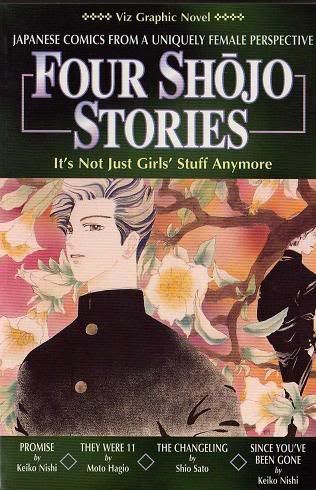
“A Little Bit Of Life” – Four Shoujo Stories (manga) – 7/10 Beach Balls


Nobody can go back and start a new beginning, but anyone can start today and make a new ending. ~Maria Robinson

Genre: A mix of Shoujo and Josei stories. Other than that, it’s in the review for each one-shot.

Review Status: Complete (1 Volume/1 Volume)

Licensed: Yes, this manga is licensed in the US. However, it is out of print, and due to when it was brought over (’96), the art is flipped in the US printing.

Art: The art is slightly dated, though still pretty typical for shoujo series. The lines aren’t always clean, but you have long-haired girls and big eyes. Some of the art is better than others. The one-shots collected in this are from all different time periods- They Were 11 was published in ’75, while some of the others date from the 80’s and 90’s.

Summary
: In the review for each one.

Review:
This collection of stories is was the first shoujo manga published in the US. It’s a bit of a shame that it’s now out-of-print. Four stories from various mangaka that sprawl various genres and situations, this collection shows the roots of shoujo. However, I regret that they didn’t always pick the best stories to be published and really show Shoujo’s abilities. Two were very good, but the other two were poor in execution and story. However, the two that are good are worth seeking out on their own.

‘Promise’ by Keiko Nishi (Slice-of-Life/Drama/Supernatural)
A girl’s who’s become lost in life meets a stranger who is strangely familiar, and helps her gain back some understanding and happiness in life. Reiko always knew her mother wasn’t going to stay a widow forever, but when her mother suddenly introduces her to her husband-to-be, it comes as a shock. Reiko’s feeling as confused and as in turmoil as many people do when their parents decide to remarry- something that’s far from uncommon in today’s society. She has a hard time coming to terms with it and wishes she were dead so that she wouldn’t have to deal with it all- like her twin brother who never got a chance to live. Of course, the mysterious stranger who becomes friend and confidant expresses the idea that perhaps her brother is the one who is jealous of her. Perhaps in dealing with all the stress and discomfort of family life, Reiko is the lucky one. This was nice because it’s so relatable for so many people. While it’s not the best one-shot I’ve read, it most definitely is one for when you’re stressed by family and feel like giving up. 8/10

‘They Were 11’ by Moto Hagio (Sci-fi/Psychological/Mystery/Shoujo)
Only 10 students were sent out in on the mission into space. So why are there 11? Who is the extra, and why are they there? This is by far the best one-shot in the volume. This slowly explores the mystery of the ship- why it was abandoned, what happened to the people on it- while getting into the psychology and suspicions of the students. Tensions start building from the beginning as they can’t verify who is and isn’t a student. Accidents begin to happen and things start centering on one student who has empathetic abilities. Whether these students will survive is questionable, and will keep you on your seat! Good enough to have had a movie version made of it, this is a great story for anyone who enjoys thrillers! 10/10

‘The Changeling’ by Shio Sato (Sci-fi/Shoujo/Drama)
Lin has come from earth to contact and research a civilization started a thousand years ago. What she finds is a civilization that had a revolution 70 years ago, destroying a decadent noble class and establishing a virtual utopia. But why did it happen only 70 years ago and no sooner? What’s the secret behind these people that have genetically engineered themselves to no longer be able to breed with humans? This story is pretty short and to-the point, written in the vein of ‘I, Robot’ or ‘Bicentennial Man’. It isn’t half as sophisticated as those stories, though, and fails to have much dramatic emotional impact when the secret is exposed or when the explanation for everything is given. With such weak characters and a rushed pacing, this is a very weak addition to the volume. 6/10

‘Since You’ve Been Gone’ by Keiko Nishi (Josei/Drama)
The second contribution to this collection by Keiko, this story is about a man who’s been visiting his mistress when an earthquake hits. Enticed to stay, he starts reminiscing about how he met and fell in love with his wife. But was it really love? Or does he love his mistress? What does each woman really mean to him? It’s not as well put-together as her other work in this, ‘Promise’, is. It only shallowly explores his feelings for his wife and how they got together, and his relationship with his mistress is downright annoying. His mistress behaves like an immature child, while his wife lives out-of-touch with the world. The plot is pretty tragic, though, since when he realizes who he truly loves that person ends up dying. Overall, though, this is another poor story. 5/10

Overall, the four stories in here do manage to convey the range of shoujo and josei stories out there, but are of mixed quality.

Recommended
: 14+. There is a little language, I remember the d-word being said twice. There are two instances of Barbie-doll nudity or where the genitals are covered up. ‘They Were 11’ had alien races involved, and two of them are hermaphroditic until maturation- one never matured and lives an extended life as a monk among his people, another will gain the ability to become fully a man if s/he passes the test they are on. S/he and another guy develop a somewhat romantic relationship, and s/he states that s/he would become a woman for him. In another story, a man is having an affair. No nudity or sexual situations are shown, just his bare chest and some of her legs. Any and all deaths are either offscreen and/or implied.

Other titles you might enjoy
:
They Were 11 (anime)
Solanin (manga)
Watashitachi no Shiawase na Jikan (manga)
Town of Evening Calm, Country of Cherry Blossoms (manga)

Saturday, July 9, 2011

“The Final Frontier” – Planetes (anime) – 10/10 Beach Balls


"All men dream: but not equally. Those who dream by night in the dusty recesses of their minds wake in the day to find that it was vanity..."
- extract of a T.E. Lawrence quote

Genre: Sci-fi/Romance/Slice-of-life/Drama

Review Status: Complete (26 Episodes/26 Episodes)

Licensed: Yes, this anime is licensed in the US

Art/Animation: Very nice. This goes for a more realistic look to the art, and the animation holds up to standards. There’s some absolutely wonderful CG work thrown in, and while it can be rather obvious where it is, it’s not an eyesore.

Dub Vs. Sub: Dub is pretty decent. I overall preferred the sub merely because the voice actor for Hachimaki puts such energy into his performance, but both are watchable.

Summary: In 2075 AD, regular commercial flights can take you to cities on the moon or space stations orbiting the Earth. But there exists a thread that may seem trivial but left unchecked can prove fatal: Space Debris. This is the story of the Debris Section of the space station ISPV-7 who diligently collects orbital debris to keep space travel safe. Hachirota “Hachimaki” Hoshino, an experienced EVA (extra-vehicular activity) worker, toils away at his thankless job, hoping to one day own his own spaceship. (from back of DVD cover)

Review
: I had read the manga a while ago, so I came into this thinking I knew the story. I was wrong. These are different enough that I cannot compare them on any level, and so will not be doing this review with any comparisons.

The members of Debris Section, or “half-section” as they are oft referred to due to a lack of a full crew, are all working hard to fuel their hopes and dreams. We follow Tanabe as she meets and gets to know them, the perils of the job revealing themselves to her the longer she stays and becoming more than she could ever have imagined. Tanabe herself is a rather naïve newbie in Half Section. She believes in love- that everyone should be cherished, that tributes to it should be admired, that people want nothing more than to be together and love one another deep down. Her idealism is brought down a notch in the first episode, but throughout it morphs into a deep faith in people and into doing the right thing- and she is a strong character for it. Hachimaki is an unrepentant dreamer. He manages to hold tight to his dream of having his own ship for a good long time, and must face demons of an accident in order to cling to them. He goes down the wrong path in trusting and loving others, but manages to make it back. The rest of Half Section are almost as deep and complex, from Fee, a rather mysterious smoker that is willing to face down terrorist attacks to get a smoke and has friends in high places in the system, to Ede, a temp worker that almost never talks, but has a drive and determination to overcome her past that puts many to shame. Even minor side characters manage to come across as multi-dimentional, real people. The first half of the anime is spent developing them, rarely taking itself too seriously, but with undertones that more serious stuff is afoot.

Character development is blended beautifully with the plot. At first it seems like the daily life of the debris collectors- sharing in their lives and loses, discovering the things that keep them in space or away from Earth. It seems very down to earth, with realistic situations involving the hierarchy of the company and various company politics. It soon grows into more than that. Internal and national politics come into play early on- the same episode that Tanabe’s idealism comes against a wall. An early forewarning of a more serious plot is the bombings of the smoking rooms on the Moon- as funny as the episode where this is introduced was, it’s terrorism nonetheless. As the crew of Half Section is pulled into these events during the regular course of their duties, they find themselves mixed up into planetary politics and company politics that have far-reaching consequences for everyone on and off of earth. Friends become foes, conspiracies and double-dealings abound, and subtle maneuvering wins the day though it might not be a perfect happy ending to the situation.

Of course, that’s not the end of things. Not by a long shot. Bad things happen to good people. No one within Half Section is left unaffected, least of all our main characters. And a decision is placed before Hachi that makes fulfilling his dream of going out into space on a 7 year cruise to Jupiter a hard choice to make. It does get a little philosophical as Hachi wrestles with the fears that were left from an accident that occurs during the series, but it’s through this that he’s able to come to terms with leaving and why, and who exactly he’d be leaving behind. He’s lived with his father doing it to his family, and he must figure out how to be at peace with it… or abandon his hopes altogether. The very ending is beautiful- a simple scene of family life that is touching and yet so bittersweet when I realized what exactly it meant.

Overall, this is a realistic and brilliant anime about garbage men in space.

Recommended: 15+. There’s some rough language- I don’t remember any f-bombs being dropped, but at least once an episode someone was dropping a “What the h---“, and occasionally using the alternate word for donkey, calling someone an illegitimate son, and there was one written instance of the word for female dog. Sometimes it was unnecessary and just the way the person spoke (which I can sympathize with as my brother speaks like that), and sometimes it was definitely situation-appropriate. The anime also deals with some heavy themes. One woman was abused and forced into prostitution by her husband, a few characters deal with the idea and consequences of killing another person- when it’s okay, and how one can be brave enough to sacrifice themselves- along with the dangers that come along with their jobs (from being hit with debris, to drifting off into space, to dying of cancer from radiation).

The violence is just a bit worse than Star Wars- most of the instances of death have discretion shots. The first people who die you see some blood fly and then another person moves over so you don’t see the bodies. Many of the shots you see some blood fly and then they fall over. However, there were about three times when the death was emphasized for horror and to show how terrible it was, not by making them gorefests but by making the people fall into another’s arms or other things. There was never anything excessive shown- I actually feel that it was done more tactfully than most PG-13 movies show. As far as sexual content, in the first episode Hachimaki picks up a porn magazine and tells Tanabe (who’s outraged) that it’s a long trip and things could happen between men and women, so it’s necessary. He’s forced to put it back. It does make a cover appearance in two other brief shots in the anime, but one time unless you’re paying attention then you’ll probably miss it. There is some slight sexual tension a few times- they are asked whether they’ve had sex twice, Tanabe is told that having dated for about two months might be the time to do it, and they do end up in a hotel room together. This goes absolutely nowhere, though.

Other titles you might enjoy
:
Planetes (manga)
To Terra… (manga and anime)
Saturn Apartments (manga)
Eureka Seven (anime)
Moonlight Mile (anime)
Twin Spica (manga)
The Wings of Honneamise (anime)
Real Drive (anime)

Saturday, June 25, 2011

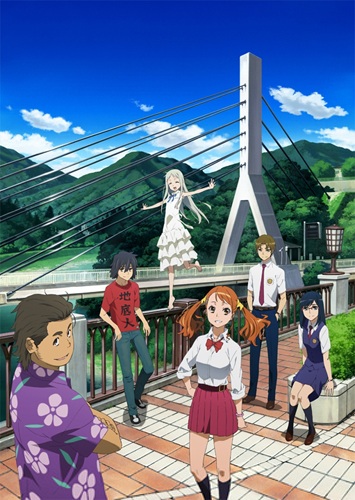
“Live And Let Go” – Ano Hi Mita Hana no Namae wo Bokutashi wa Mada Shiranai (anime) – 10/10 Pools


Death leaves a heartache no one can heal, love leaves a memory no one can steal. ~From a headstone in Ireland

Genre: Slice-of-life/Supernatural/Drama

Review Status: Complete (11 Episodes/11 Episodes)

Licensed: No, this anime is not licensed in the US

Art/Animation
: Very nice. The lines are crisp and clear, the colors bold and bright (no pastels here!). The animation on-par for what a slice-of-life should be, pretty smooth.

Dub Vs. Sub: There is no dub for this anime.

Summary: A group of childhood friends drifts apart after one of them, Meiko "Menma" Honma, dies in an accident. Years later, the leader of the group, Jinta Yadomi, has become withdrawn and lives as a recluse. An older Meiko appears to him, and says that she must have a wish granted, though she does not know what it is. (Wikipedia)

Review: Death is inescapable. How we deal with it differs, though. As adults, most of us have gone through various stages of grief and grieving. Children, though, are much more complicated. How can they deal with death when one of their friends dies? For this group of friends, they all still carry wounds from that day. Every one of them feels that they contributed to her death in some way. Mix that with complicated emotions that they were dealing with at the time, issues left unresolved, and all of them have had their lives affected in big ways.

In this anime, they have a chance to heal. Menma has appeared to one of them, and with that he realizes that she needs to move on. However, his emotions war with that. As a child he loved her, and those feelings haven’t died. His guilt over what happened- having run away from the clubhouse caused her to follow him, and she subsequently ended up drowning. All his friends deal with similar issues, from Anjou’s love for Jinta and guilt for being happy Menma was dead, Yukiatsu’s unrequited love for Menma and being unable to stop her as she ran after Jinta, Tsuruko’s jealousy over never being able to have Yukiatsu’s love… Even Poppa hides some serious guilt and agony over her death.

Jinta’s friends struggle to believe that Menma is actually back, they come together regardless to support each other because of their strong ties with one another. Their guilt over what happened and lingering bonds of nostalgia and friendship are what keep them coming back, even when they don’t truly believe.

Of course, that doesn’t mean that all is well. Each person has their own level of belief as to whether Menma is really there, and their grief plays into that. Yukiatsu was so driven by his grief that he has a tendency to ‘become’ her- he dresses in a wig and dress similar to what she looked like, and tries to use it to cast doubt on Jinta’s claims. Poppa is so driven by being unable to stop her death that he fully believes that she has come back and is unable to rest properly.

Trying to find out what her last wish was, why Menma is back and unable to rest, drives them together as their belief is sharpened through several unmistakable signs that she is there. Seeing it all come together is beautiful. Each step brings them closer to what her final wish is. Each episode shows more of their past and what fuels their guilt and brings them together so many years together. The last episode may leave some wanting, as the issues that they are dealing with were aired out, but they aren’t truly resolved. However, that’s the first step to healing, and they still have a lot of that to do. All of them do end up with resolution over Menma, and are able to say a final goodbye- something that they desperately needed.

Overall, this was a beautiful anime about love, loss, and the healing that comes after.

Recommended: Yes. Ooooh, so yes. 13+ due to some sexual innuendo- there is an allusion to Jinka getting ‘excited’ when Menma sits in his lap (the look on his face and the sound effect conveys it all). He also peers between his fingers to her covered bosom to mention that she hasn’t grown that much. Anjou is nearly forced into a love hotel against her will, and there are two mentions about her virginity. Rumors spread around school about her being a prostitute. Jinta and Yukiatsu nearly get into a fight, and Yukiatsu ends up strangling Jinta for a bit. I can only remember one swear in the entire series- one instance of the ‘d-word’ in a very appropriate situation.

Other titles you might enjoy
:
Grave of the Fireflies (anime)
The Music of Marie (manga)
Tokyo Magnitude 8.0 (anime)
The Girl Who Leapt Through Time (anime)
Rainbow (anime)
Ginban Kaleidoscope (anime)
Millennium Actress (anime)
Utahime

“Getting To Know You” – Kimi ni Todoke (Season 2) (anime) – 8/10 Pools


Love has no desire but to fulfill itself. To melt and be like a running brook that sings its melody to the night. To wake at dawn with a winged heart and give thanks for another day of loving. ~Kahlil Gibran

Genre: Romance/Slice-of-Life/School

Review Status: Complete (12 Episodes/12 Episodes)

Licensed: No, this anime is not licensed in the US

Art/Animation: There really isn’t anything unique about the character designs, but the colors are bright and lovely, and the backgrounds are mainly lovely watercolors. The animation is sub-par for a slice-of-life anime. It tends to be on the rough side, surprising since there isn’t a whole lot of movement and there is no action per say.

Dub Vs. Sub: There is no dub for this anime.

Summary: The continuation of the first season. Sawako Kuronuma and her friends have just begun their second year of high school and they are in the same class together again. To make matters more interesting a male student newly transferred into their class is seated right next to Kuronuma and has taken an interest in her. What hurdles will Sawako and Kazehaya face next? (from MAL.net)

Review: While I wasn’t impressed by the pacing in the first season, this second one took it up a notch. It started off with a bang- a new guy transferring in, and he’s not impressed by the main couple’s dithering around! So of course he offers to help Sawako and be her friend. Quite a few episodes are spent building up the tension as Kazehaya watches them get close and is infuriated by it.

This plays around with some of the things that often show up in shoujo romances- for instance, it’s Kazehaya that gets up in arms when he sees Sawako getting close to the new guy. The really nice thing about this is that he neither sees the need to get ‘revenge’ or behave like Sawako is his property during it. He doesn’t have that personality, and the author stays true to it.

The second season is also where The Confession happens. Finally! The ball gets moving between our main protagonists. What was also very pleasant about this story is that it’s not all ‘I love you everything’s good and we can live happily ever after’. There is no way that the story could end up like that! The mangaka kept in mind that Sawako is the most feared, avoided girl in the school, and that there would be little to no chance people would accept their relationship right off the bat. So while the confession does happen, they spend a few episodes going through people’s reactions to their relationship.

Why am I not as impressed by this as I could be? The love triangle. I’m very, very tired of this particular shoujo cliché. I’m just glad that it acted as an immediate catalyst for the confession. Sawako had to be particularly clueless for a few minutes after, but within the next episode everything was back to rights, and the main couple was official. The other thing that I was disappointed in was how the last episode ended. Yes, they’re together, but there was a clear cliffhanger for a potential third season. I should expect it within the next few years. Until then, you might want to pick up the manga if you need to see their relationship grow and solidify before then.

Overall, if you liked the first season, you’ll love the second!

Recommended: Yes! 10+, this is a very family-friendly romance. Pin (one of the teachers) is a little perverted, but most of what he says will go over the heads of younger kids. No fanservice, no language, the ‘scary’ scenes of Sawako being the town ghost aren’t scary since you know how sweet she is and it’s not presented in a frightening way… This season is almost as clean as a whistle.

Other titles you might enjoy:
Kimi ni Todoke (Season 1 and the manga)
Train Man (manga)
Princess Jellyfish (anime)
Emma: A Victorian Romance (anime and manga)
Lovely Complex (anime and manga)
Ouran Host Club (anime and manga)
Clannad and Clannad Afterstory (anime)
Ah! My Goddess (anime and manga)
Fruits Basket (manga)

Thursday, June 16, 2011

“A Picture of Heaven” – Tamayura (anime) – 9/10 Pools


Dream as if you'll live forever, live as if you'll die today. ~James Dean

Genre: Slice-of-Life/Comedy/Spiritual

Review Status: Complete (4 Episodes/4 Episodes)

Licensed: No, this anime is not licensed in the US

Art/Animation: Not as good as you would expect from an OVA series. The animation is decent, and the colors light- like pastels. The art is pretty simple and undetailed, but has clean lines.

Dub Vs. Sub: There is no dub for this.

Summary: In the Seto Islands, there is a town that Fu and her family has moved back to. She and her friends hang out and have good times while they search for a place a special photograph was taken of her now-deceased father.

Review: Memory fades, but a picture lasts forever. Fu tries to capture moments both big and small with the camera left to her by her now-deceased father. Nostalgia permeates the story, something that shouldn’t be surprising since the director was also in charge of ARIA. It’s brought about by a photograph that was taken by Fu when she was younger, a picture of her father surrounded by little balls of light that she refers to a ‘Tamayura’, little balls of happiness that appear in a photo when everyone involved is at peace and happy.

Life is slow and peaceful for these girls. They go to school, talk about what they want to do for the future, pose for Fu’s pictures, enjoy Fu’s grandmother’s cake, and go on a few adventures to discover where the photograph was taken. All of them have interesting personalities- unfortunately, due to the length and amount of the episodes, they are more distinctive due to their quirks than anything. One enjoys whistling, and whistles almost everything, another is hyperactive and adores Fu’s younger brother to pieces, and the third seems like a very personable, level-headed girl who’s ever so slightly annoyed by her sister’s antics.

What this anime emphasizes is that it’s not always the destination, but the journey. They don’t always find what they’re looking for, or know where they’re going, but it’s always fun and an adventure, one that’s worth going on. And sometimes life takes you interesting places that you never dreamed of, or meet people that you never would have hoped of meeting before.

Overall, this was a sweet slice of life that really captures Fu and her gentle personality.

Recommended: Yes! All ages. There’s no language, no violence, and the only nudity is Barbie-doll nudity as they visit a bathhouse. Most of the characters are underwater, and it’s all very non-sexual, just them relaxing and having a good time. I would compare it to the bathing scene in My Neighbor Totoro.

Other titles you might enjoy:
ARIA (anime and manga)
Hidamari Sketch (anime)
Natume's Book of Friends (anime and manga)
Yotsuba (manga)
Minami-Ke (anime)

Wednesday, June 1, 2011

“Bad Girl Gone Good” – Serenity (manga) (Review Part 2) – 3/10 Pools


You can tell the size of your God by looking at the size of your worry list. The longer your list, the smaller your God. ~Author Unknown

Review Part 1 found HERE

Genre: Christian/comedy/slice-of-life

Review Status: Complete (10/10)

Licensed
: Yes, this manga is licensed in the US. OEL, actually.

Art: Better than the first few volumes. It’s still good-quality doujinshi art, not really professional-looking, but not bad. The backgrounds are still undetailed, and there’s a high number of no-background panels. The clothes still look silly, the art is still left-to-right instead of like the Japanese right-to-left, and there’s more American influence than Japanese.

Summary: Her name is Serenity Harper and she’s one obnoxious little bundle of attitude, anger, and animosity. Can the case and concern of Derek, Kimberly, and the rest of the Prayer Club break through Serenity’s tough shell- and prove to her that true love does exist? (from the back cover of the first volume)

Review: I had a very hard time deciding whether this was better or worse than the first five volumes. In some ways, there is a marked improvement. The storytelling becomes less rushed, more about everyday life and having fun, casually mentioning the Bible and Serenity’s struggles with it. And I will say, for the most part, the ‘movie’ sections of the manga were fairly entertaining.

However, this still struggles with many of the same issues that the first half struggled with.

The pacing might be better, but the characterization? Except for the ninth volume where you get a surprisingly in-depth look at Christian morality about casual sex and the struggles with it, it goes from staggered and unbelievable to nonexistent. It’s like the author just stopped caring back in the third volume where they started her praying. Does she still ‘struggle’ with her faith? Yes. However, it’s beyond superficial. If there was any doubt before the seventh volume, at that point it ends. She’s talking to God and going to church. The 8th and 9th volumes are there to take up space.

No, no, I’m wrong. They’re there to show how hateful and irrational non-Christians are. You have more disparaging remarks from her mother (who, as I’ve said before, is completely out of character to be saying what she’s saying, considering how she’s into every other religion on earth). She has a rather magical softening towards her daughter. And then you have the completely irrational attacks by the school counselor, who goes to insane lengths to…. Well, we never find out. Unresolved plot threads ahoy!

That’s right. Instead of cutting the movie sections out – or even cutting them short- they decide to go with them and leave a few important side plots dangling. What makes it worse is that in volume 9, the end to the movie section is also left hanging! Volume 10, though, had to be the worst offender. This was a very heavy-handed Author Tract on not accepting God’s love, twisting a brilliant story on God and man, nature and breeding (Frankenstein, to be specific), into a very poorly-written metaphor.

I believe I mentioned before how much I disapprove of teaching bad theology. This continues the trend in volume 6. C.S. Lewis’ insanity-liar-truth triad has been taken apart by both Christian and non-Christian theologian alike, and yet is presented and used in it. Serenity does have bigger, harder questions, though, and when she asks them? HEY LOOK A DISTRACTION! Yep, they are avoided, and avoided hard. This does everything it can to not have to deal with those, and when someone coming from a background as Serenity fails to follow up for answers and becomes Christian regardless, I have to headdesk. It would be nice to see things such as doctrinal divisions between churches dealt with, especially since those are massive hurdles to someone who’s new to the faith. This is probably why her teacher’s (and youth group’s pastor) denomination is never mentioned, and the most in-detail they go into them is saying that one of the members goes to a different church.

Yet again, I am highly disappointed. While some things improved over the first five volumes, there were an equal amount that went down the drain.

Overall, Serentiy fails to be a compelling conversion story- on any level.

Recommended: No. Just no.

Other titles you might enjoy
:
Manga Messiah (manga)
Shelter of Wings (manga)
High School Debut (manga)
Gakuen Utopia Manabi Straight (anime)
Gakuen Alice (anime or manga)
Aria (anime and manga)
Aishiteruze Baby (anime or manga)
Train Man: A Shoujo Manga (manga)

Sunday, May 29, 2011

"Country Boys" - Popcorn Romance (manga) - 6/10 Flowers


Summer Lovin', Happened So Fast! ~Grease

Genre: Slice-of-Life/Shoujo

Review Status: Complete (1 Volume/1 Volume)

Licensed: Yes, this manga is licensed in the UShttp://www.blogger.com/img/blank.gif

Art: It’s so very 90’s- super-big eyes, dated styles for the hair and clothing, and overall doesn’t seem that clean or sleek.

Summary: A pair of metalhead brothers were psyched. They made their onstage debut when disaster struck… one of them collapsed. So to recuperate they decided to rest at their grandfather’s farm in the country… but now the farm might be turned into a golf course… what are they going to do… and what’s to become of the love they left behind in the city?

Review: When I opened this up, I could tell how old the manga was by the look of the art. Once I got past that and was able to focus on the story, I discovered a sweet, short little romance. The premise is believable- a boy with a genetic disorder, that could potentially kill him, needs to go to the countryside to recuperate. His brother comes with, leaving his girlfriend that he loves behind in the city.

They’re immediately put to work, harvesting potatoes, dealing with a few fans that live in town… and discover that they really enjoy the countryside, with its beautiful views and unspoiled wilderness, and try to find a way to keep the golf course from being made.

It’s the execution that sometimes is downright silly. Zenta has a talent for singing the wild beasts to him (a reference is made to this being like Sleeping Beauty). He’s thoughtless and has a tendency for forgetting his medicine. Overall, though, even though it’s incredibly idealistic, it’s not a bad story. The only things that I really had a problem with were some very regional and historical references- for instance, one of the women in the forest is freaked out by Zenta and thinks that a Russian soldier is roaming around. This would require some knowledge of history to really realize why it is funny.

I think that I preferred the bonus one-shot that was included in the manga, ‘The Magic of Love’. It dealt with something that you rarely see in manga or anime- a girl who’s self-confidence is wrecked by her bad acne. What was really nice was how the guy who liked her was able to look past her acne and see the sweet girl that was underneath. With more modern-looking art, and dealing with a very common subject and problem with teens, I really thought it was a great little story.

Overall, it was a nice, short read, but not something I would ever buy.

Recommended: 5+. No language, no nudity, the only thing that might be an issue is one of the brothers is very girly (and I mean, looks really girly and has a penchant for girl’s clothing). This is played for laughs, since he doesn’t like people thinking that he’s a girl… although even though he’s pretty manly when he’s all grown-up, he does wish that he could pull off a wedding dress like his brother’s bride does. At one point, just to have some fun, he does dress up in a dress to sing to the animals. One of the weasels is hit by a car, though there is no blood or gore, and the animal does live.

Other titles you might enjoy:
Yotsuba (manga)
Train Manga: A Shoujo Manga (manga)
Town of Evening Calm, Country of Cherry Blossoms (manga)
Baby & Me (manga)
Aishiteruze Baby (anime and manga)

Saturday, May 21, 2011

“Bad Girl In Town” – Serenity (manga) – 3/10 Flowers


You can tell the size of your God by looking at the size of your worry list. The longer your list, the smaller your God. ~Author Unknown

Genre: Comedy/Christian/Romance/Slice-of-Life

Review Status: Incomplete (5 Volumes/10 Volumes)

Licensed: This is not only licensed in America, it’s an OEL.

Art: Doujin-quality. Obviously heavy on the computer graphics and colorization. More like American comics than manga, honestly. Plus, the artists have no fashion sense and have her run around in the most ridiculous/ugly outfits they can think of to try and emphasize how ‘counter-culture’ she is. At least, I’m hoping that’s the case.

Summary: Her name is Serenity Harper and she’s one obnoxious little bundle of attitude, anger, and animosity. Can the care and concern of Derek, Kimberly, and the rest of the Prayer Club break through Serenity’s tough shell- and prove to her that true love does exist? (from the back cover of the first volume)

Review: Having seen this manga being reviewed on a blog I semi-follow, I decided to pick it up. I had read this many years ago and recalled being less than impressed. Were my reactions justified?

As you can see from my score, yes. The plots in the volumes are disjointed from the beginning. It jumps from one scene/plot/idea to another with little to no breathing room. When it does that, it really doesn’t give the stories that are there the time or thought that they need. Some don’t need half a volume, no, but others really need some fleshing-out. Still more, such as the story of the abandoned baby, seemed entirely out-of-place. While they were supposed to show her growing/becoming more mature (I think), it really should have been put later in the manga- if it went in there at all. The fourth/fifth volumes are where the author finally settles down and manages to devote an entire volume to a singular plotline, ones that finally flowed well with each other. Since that is about halfway through the series, I was less than impressed.

But what is a plot without characters? What’s funny, is that for all her shortcomings, Serenity is the one character you can sympathize with the most. She swears, drinks, does drugs, has had premarital sex… and yet is depicted as someone who just has problems that need to be overcome, just like anyone else. More of a product of a mix of things, rather than just being bad through-and-through. I wish I could say the same about the rest of the characters. The Christians come off far worse. They outright tell her she’s going to be their ‘pet project’. Who wouldn’t be flattered by that? It’s not like they’re saying they’re going to be her friends, and yet really don’t care about her friendship or anything. They’re obnoxious, blackmailing her into going to Prayer Club. Thankfully, they do get better as the story goes on, but they still remain rather flat characters due to not getting any development. Even so, I couldn’t get that first volume’s impression out of my mind, and that colored a lot of their actions.

The rest of the school confuses me. A lot. I’m very sure this is supposed to be a smaller town in America, yet the kids in Prayer Club are the only Christian kids around- not exactly an accurate picture of small-town America, where it’s not being Christian that will make you an outcast. Serenity shouldn’t have any issues finding friends outside of Prayer Club, even with her drug use, as a lot of those Christians in small-town America are, indeed, also doing drugs. But again, it’s something that gets her cast out or ignored by the rest of the student population.

The worst bit is how everyone who isn’t Christian is depicted. They’re all rough, crude, mean, somewhat psychotic people. My issue is that they don’t get better- even Serenity’s mom, who goes through a revelation in the third or fourth volume that she hasn’t been a good mom. My major issue with this is that I know people who aren’t Christian. I have friends who aren’t Christian. I have family that isn’t Christian. I was not Christian for most of my life. These depictions anger and frustrate me on a level that I cannot properly convey with the English language. And yet, there are Christians out there who will read this, who know people who aren’t Christian and yet will completely accept these depictions without question, because of how common it is in Christian literature. They will not question it- they will accept it as truth even though logically they know it’s not. Well, I’m not taking it! I’m saying here and now if that you mindlessly accept these stereotypes, then you SHAME me!

To top off this little joyride, the issues that are presented are shallow, and perhaps the biggest reason why I don’t think this would move anyone over the age of 10. Her biggest issue is how to pray. She is a thinking, rebellious teenager- praying is the smallest issue they have! There is no struggle with how a good God can allow evil to be in this world. Why anyone should believe that a guy came back from the dead. The ideas behind the Trinity, even! None of it comes into play. Even with that shallow, silly question, there is no struggle when her prayers are not answered. Serenity continues to pray and talk to God. She’s Christian by the third volume, whether or not she admits it or realizes it. Any denial is merely pretense to drag the story out longer.

Her own personal struggles are just as meaningless, and resolved with the snap of the author’s fingers. This girl has a drug issue- and yet, we never see her doing them, going through withdrawal, and when she’s offered some after a few weeks of going without? Able to turn it down without a problem. Swearing is solved just as easily by the second volume. It’s merely been days, yet she is able to break or change the habit she’s probably had for years. I’m calling it out on being completely unrealistic. All her little struggles and issues are fixed with the same ease.

This manga isn’t without its own little theological issues, though. One of my berserk buttons was hit in the first volume when the pastor says that New Age beliefs were Christian values, watered-down without any higher moral authority. This isn’t true in the least, though going into that is complicated and wouldn’t answer everyone’s questions, I’m sure. Another thing that bothered me a lot was the sidebar into divorce and how it messes up kids. Obviously, Serenity is supposed to be the poster child for this, but I’m very sure that I know children from broken homes that have fewer issues than I do. And then there was the issue with speaking about religion on school ground. Buzz Dixon, our author, shows exactly how familiar he is with this law (not at all), by making it against the rules to even say you’re Christian or be asked a person question by the students about Christianity.

This isn’t to say that it doesn’t have its moments. It does. Some of the humor does hit, some of the situations are vaguely amusing. But the outdated slang, the unfunny humor, and the numerous other issues I have described made this a series that I would rather not pick up again.

Overall, all these issues made the series a slow, frustrating read.

Recommended: I would only consider borrowing this from the library for my five-year-old neighbor. Consider it- not necessarily do it. This isn’t worth the time or energy to search out unless that’s who you’re going to be giving it to. Any swearing is done with comic-strip symbols. The sex is alluded to, and she merely says that she’s going to have him (he is shown taking a cold shower- waist-up picture, there). It doesn’t actually happen, though. She does end up wearing some daisy-dukes and one of those tops that ties in back with a string.

Other titles you might enjoy:
High School Debut (manga)
Gakuen Utopia Manabi Straight (anime)
Gakuen Alice (anime or manga)
Aria (anime and manga)
Aishiteruze Baby (anime or manga)
Train Man: A Shoujo Manga (manga)

Thursday, May 19, 2011

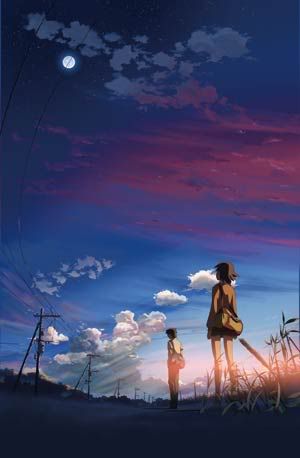
“So Far Away” – 5 Centimeters Per Second (anime)- 10/10 Flowers


We're two ships passing/At a distance/Through the darkness. ~”Journey On” from Ragtime

Genre: Romance/Drama/Slice-of-Life

Review Status: Complete (1 Movie/1 Movie)

Licensed: Yes, this anime is licensed in the US

Art/Animation: Beyond gorgeous. This is the most visually stunning anime I’ve seen- the way shadow and light plays on glass and objects, the shimmer of heat waves, the rich, vibrant colors that saturate your tv (or computer screen, depending on how you’re viewing it)… There is nothing that I can criticize in this department! The same goes for the animation. It’s brilliantly smooth and realistic.

Dub Vs Sub: It’s a rare day that any dub studio other than Disney manages to do children’s voices correctly. This was not one of them. Both of our female leads were clearly older women heightening their pitch to sound younger. Same for the boy. Also, the acting was far more stilted in the dub, though it got better as the movie went on. The sub edges it out, though, both for the quality of the voice actors and the fluidness of the acting.

Summary: Witness the story of Tatatki, a young man on a journey from Tokyo to reunite with his childhood best friend, Akari. Feel his emotions superimposed on the gorgeous, heavily researched and impressively animated backdrops of Japan as he travels by train to see her. Join Takaki on three interconnected tailes of love and lost innocence that span the minutes and months of their lives. 5 Centimeters Per Second, the speed at which the cherry blossoms fall from the trees, reminiscent of the pace of life as our lives intermingle. (Back of DVD cover)

Review: This movie is divided into three parts: A Tale of Cherry Blossoms, Cosmonaut, and 5 Centimeters Per Second. Each tells a part of the story of the character’s lives. All have the director’s trademark themes of time and distance weaving through them, and if you’re familiar with his other works, then you’ll also see his fondness for sci-fi come into play.

In A Tale of Cherry Blossoms, you see the first couple- two children, Takaki and Akari, as they go through the later years of elementary school and jr. high together. Childhood friends, their relationships is looked on teasingly by their classmates and they were just friends- until a final move tears them apart for a while. There’s something about first love that’s poignant- we remember it fondly, with smiles and regret, since first loves are usually just those- firsts. This dove right into the relationship, most of it narrated via letters, and from Takaki’s point of view: The one who was being left behind as his first love moved, came back, and then had to leave once more. At the tender age of thirteen, he gives a final push to tell her his feelings and make them clear. It’s almost impossible to be drawn in as his struggle to tell her encounters little problems that soon become hurdles, ones that he does manage to overcome with perseverance but at a great cost to their relationship- one that she pays, too.

Cosmonaut is a slice of life later in Takaki’s years, told through the eyes of another girl that has come to love him. Now in his senior year of high school, Sakae doesn’t know what she wants to do with her life, and desperately wants to tell him how she feels. Takaki, though, has his eyes and heart elsewhere. Sakae’s story isn’t quite as sorrowful as the first one, but it nonetheless allows for us to see where he is in his mind, and how others see him.

5 Centimeters Per Second is where the conclusion is. Through music and montage, we see where they came from in life, the little things that they saw and did, and where they are going in the future. First loves are never quite forgotten, but we still go on to lead our own lives regardless. There may be brief moments of remembrance, but in the end, life is what it is.

One of the interesting things is seeing how all these come together to create a beautiful story- distance is told time and again: 5 Centimeters, 5 kilometers, 8 kilometers, 1 centimeter. Time has clearly passed in each of the segments, and at each stage of his life something is happening. And yet, you see how time hasn’t affected Takaki at all... Or one could say that he’s stuck in time, with that noted in a particular background song played in the third segment. There are little things in this that add to the beauty of the movie, such as the background music (exceptionally beautiful piano scores), and how realistic it can seem. After all, who really forgets their first love?

Overall, this is a terrific film, and anyone who has a fondness for romance and first loves should definitely see it.

Recommended: Um, yes! The content is 13+ appropriate, though those about 13 or so might be bored with the slow pace and story that is told mostly through narration. The worst thing that is in here is one short scene where Sakae is wrapped up in a blanket, with one bare shoulder (and I do mean just her shoulder showing), along with the strap of her bra having slid down her arm. It’s a completely non-sexual scene, and in fact, I mistook her bra strap for the strap of a tank top or spaghetti-strap top at first. Takaki as an adult is seen smoking, and a few cans are scattered around his apartment, though since in Japan those hold anything from beer to coffee to fruit juice, you can just assume they’re for pop. There are two brief scenes of him actually drinking in a bar that last for perhaps two seconds during a montage in the last segment, and in that same one there is a scene of Takaki and a girl (assumingly his girlfriend of 3 years) in bed, though it was so brief that I had to stop the dvd to really see what the picture was of- and it was him and her in the same bed, completely covered by the sheets and facing opposite directions.

Other titles you might enjoy:
Voices of a Distant Star (anime or manga)
Kanon (2006) (anime)
Millennium Actress (anime)
Watashitachi no Shiawase na Jikan (manga)
The Place Promised In Our Early Days (anime)
Victorian Romance Emma (anime and manga)
The Girl Who Leapt Through Time (anime)

Monday, May 16, 2011

“Time Flies By” – Only Yesterday (anime) – 9/10 Flowers


Growing up is never easy. You hold on to things that were. You wonder what's to come. But that night, I think we knew it was time to let go of what had been, and look ahead to what would be. Other days. New days. Days to come. The thing is, we didn't have to hate each other for getting older. We just had to forgive ourselves... for growing up. ~ The Wonder Years

Genre: Slice-of-Life/Romance

Review Status: Complete (1 Movie/1 Movie)

Licensed: No, this anime is not licensed in the US

Art/Animation: It’s very Ghibli. The characters have babyish, rounded faces and designs. The colors are fairly bright. The animation is fluid and smooth, almost astonishingly so, with a large amount of detail in the tiniest of movements and expressions.

Summary: Taeko Okajima is a typical "office lady" in a big company in a big city. When she takes a sabbatical to the countryside in Yamagata Prefecture, the hometown of her brother-in-law, the journey recalled her memory of her 5th grade year. During her stay in Yamagata, she works hard and happily as a farmer and is surrounded by friendly relatives and villagers, bringing up more memories. Their hospitality makes her to reconsider her choice of life. (ANN.com)

Review: At some point in our lives, we look back and ask where it’s leading. Where are our lives going? And we look back to see how we got there in the first place. Taeko is in such a position, loving her vacations out to the country. This particular trip, starting out with a discussion on how she had turned down a marriage proposal, brings back memories that she can’t seem to shake. From memories of first loves, to how spoiled she’d been, everything brings up a particular point in her life- all happening when she was ten years old.

This film weaves past and present beautifully, with people from her past (including her younger self) running through the present, or signaling that the memory has ended. It’s not as smooth as I’ve seen in other movies, but nonetheless is charming to see the symbolism they present. The memories that are brought up also fit wonderfully with the scene that triggers them. The discussion about the marriage proposal is followed by thoughts of her first love. Hearing a girl talk about how she wants Puma sneakers brings to mind her selfishness. They flow together in a smooth narrative that is a joy to follow.

All the memories make her think about how she was back then, how she loved life. They make her think about where she is in life right now. Things brought up or mentioned in the beginning come into play later on in the story as she makes her important life decisions. The only thing that brings down the score is that, while the ending is very fitting, it almost seems too abrupt or rushed- you see how she and her relative-by-marriage go through mild courting, but the romance in it feels a bit forced in the end. This might be due to cultural differences, since marriage in Japan is treated differently from here in the West, and the way it’s treated today in Japan has changed a bit from twenty years ago.

Regardless, there are few flaws to be found in this film. It’s a rare look at how a woman comes to maturity. The Seiyuu did an outstanding job. The music in the background is used judiciously- about half the film is merely silence and sound effects, while the rest contains various folk music songs that range from the exotic (one is pointed out to be a Hungarian group that plays traditional farmer’s music), to merely upbeat and sweet to listen to. This movie has aged incredibly well, with the issues and themes that it deals with as relevant today as it was twenty years ago, and connects to those in countries across the world.

Overall, this is a wonderful film about growing up and finding yourself.

Recommended: Yes. Goodness, yes. 8+, though this age does depend on how open the family is about the reactions the characters have about learning about periods. Really young children will probably be bored, as there are no magical animals or wild adventures. There’s also one use of the d-word.

Other titles you might enjoy:
Whisper of the Heart (anime)
Ocean Waves (anime)
ARIA (anime or manga)
The Girl Who Leapt Through Time (anime)
Planetes (anime and manga)
The Color of Earth/Water/Heaven (manhwa)
Town of Evening Calm, Country of Cherry Blossoms (manga)